Mostrando las entradas con la etiqueta #ElectionCenter. Mostrar todas las entradas

viernes, 23 de agosto de 2024

2024 Democratic National Convention.


Chicago, IL at August 23rd, 2024 (Wikipedia). The 2024 Democratic National Convention was a presidential nominating convention in which delegates of the United States Democratic Party voted on their party platform and ceremonially reported their vote to nominate Vice President Kamala Harris for president and her chosen running mate Governor Tim Walz for vice president in the 2024 presidential election. It was held from August 19 to 22, 2024, at the United Center in Chicago, Illinois. Delegates virtually nominated Harris and Walz the first week of August. Harris is the first Black woman and first South Asian woman to be the presidential nominee of a major political party in the United States, and the first Democratic presidential nominee from the Western United States. 

Earlier, on March 12, incumbent President Joe Biden became the presumptive nominee, running against what a reporter at NBC News called "token opposition" during the primaries.


Conflicts with ballot deadlines led the Democratic National Committee to vote on June 20 to allow an early online nomination vote. Following his June 27 debate performance and decision on July 21 to withdraw his candidacy, Biden endorsed Harris.
With the other most viable presidential prospects endorsing Harris, she secured the support of enough convention delegates to make her the new presumptive nominee the next day, and Harris was the only candidate with enough delegate support to be on the ballot. 


© 2024 ALL RIGTHS RESERVED MSH WorldWide Company By Marcelo Santiago Hernández.

viernes, 19 de julio de 2024

2024 Republican National Convention.


Milwaukee, WI at July 19th, 2024
(
Wikipedia). The 2024 Republican National Convention was an event in which delegates of the United States Republican Party selected the party's nominees for president and vice president in the 2024 United States presidential election. Held from July 15 to 18, 2024, at Fiserv Forum in Milwaukee, Wisconsin, it preceded the 2024 Democratic National Convention, which took place from August 19 to 22 at United Center in Chicago, Illinois.


The convention began two days after an attempted assassination of the party's presumptive nominee Donald Trump at a campaign rally near Butler, Pennsylvania. Trump accepted his party's nomination on July 18, becoming the second Republican to be nominated three times for president after Richard Nixon in 1960, 1968, and 1972 and the first Republican to receive three consecutive presidential nominations. JD Vance, the junior United States senator from Ohio, accepted the party's nomination for vice president.
On July 15, the first day of the Republican National Convention, Trump announced JD Vance as his nominee for vice president.


© 2024 ALL RIGTHS RESERVED MSH WorldWide Company By Marcelo Santiago Hernández.

lunes, 1 de julio de 2024

2024 Democratic Party Presidential Primaries and Caucuses.


New York City, NY
 (Wikipedia). 
2024 Presidential primaries and caucuses On January 23 to June 8,  were organized by the Democratic Party to select the delegates to the 2024 Democratic National Convention, to determine the party's nominee for president in the 2024 United States presidential election. The elections took place in all U.S. states (except for Florida and Delaware), the District of Columbia, five U.S. territories, and Democrats Abroad.

Incumbent President Joe Biden had repeatedly expressed his intent to run for re-election since 2021, although there was speculation in the first two years of his presidency that he might not seek a second term due to his age and low approval ratings. Former Democratic House representatives, including Carolyn Maloney, Joe Cunningham, and Tim Ryan, had publicly said Biden should not run. There was also speculation that Biden may face a primary challenge, especially from a member of the Democratic Party's progressive faction.

After Democrats outperformed expectations in the 2022 midterm elections, many believed the chances that Biden would run for and win his party's nomination had increased.On April 25, 2023, Biden announced via a video that he would be running for re-election.


Kennedy withdrew from the Democratic primaries in October 2023 to run as an independent candidate. Williamson suspended her campaign following the Nevada primary in February 2024, before unsuspending her campaign following the Michigan primary later that month. On March 6, 2024, Phillips suspended his campaign and endorsed Biden. Phillips received the second-highest number of delegates in the primaries (four delegates gained). Biden lost American Samoa to venture capitalist Jason Palmer, becoming the first incumbent president to lose a contest while appearing on the ballot since Jimmy Carter in 1980. However, he won every other contest by a large margin.

© 2024 ALL RIGTHS RESERVED MSH WorldWide Company By Marcelo Santiago Hernández.

2024 Republican Party Presidential Primaries and Caucuses.


New York City, NY
(Wikipedia). 2024 
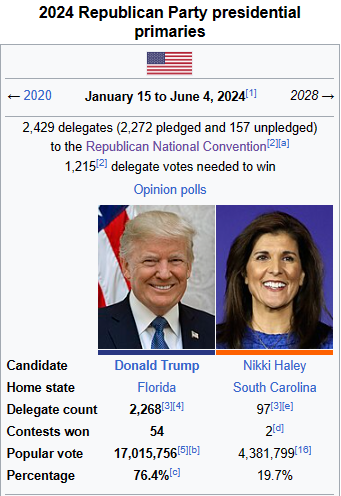
Presidential primaries and caucuses of the Republican Party took place within all 50 U.S. states, the District of Columbia, and five U.S. territories between January 15, 2024, and June 4, 2024, ahead of the 2024 United States presidential election. These elections selected most of the 2,429 delegates to be sent to the Republican National Convention. Former president Donald Trump was nominated for president of the United States for a third consecutive election cycle.


In 2023, a crowded field of candidates emerged, including Florida governor Ron DeSantis, former Ambassador to the United Nations Nikki Haley, wealth management executive Vivek Ramaswamy, and former president Donald Trump. Trump maintained a consistent lead in primary polling since 2020. Among non-Trump candidates, DeSantis initially polled in a close second behind Trump, but his polling numbers steadily declined throughout 2023. Ramaswamy experienced a small polling bump in mid-2023, but this proved to be brief.Haley's campaign began attracting greater attention in the final months of 2023, though neither she nor any other candidate came close to Trump in polling. The Republican primaries were referred to as a "race for second" due to Trump's consistent lead in polls.

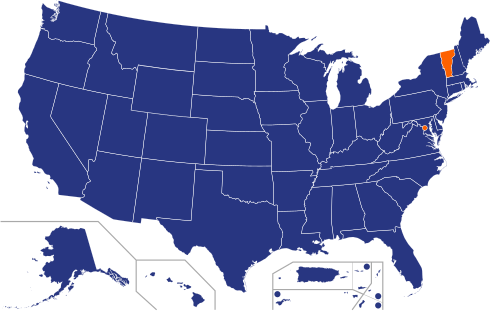
At the January 15 Iowa caucuses, Trump posted a landslide victory, with DeSantis narrowly beating out Haley for second place and Ramaswamy in a distant fourth. Following the Iowa caucuses, Ramaswamy and DeSantis dropped out of the race and endorsed Trump, leaving Trump and Haley as the only remaining major candidates. Trump then defeated Haley in the January 23 New Hampshire primary, albeit by a smaller margin of victory than he achieved in Iowa; he defeated Haley again in the February 24 South Carolina primary a month later. After Trump's overwhelming victories nationwide on Super Tuesday, Haley suspended her campaign on March 6, having only won Vermont and the District of Columbia.

Some Republicans have expressed concerns about Trump's candidacy due to his loss in 2020, his alleged role in inciting the January 6 Capitol attack, ongoing criminal cases against him, and the results of the 2022 midterms (in which several Trump-endorsed candidates lost key races). However, many others have supported him and decried the investigations as politically motivated. Trump maintains high favorability ratings among Republican voters. Trump's eligibility to appear on the ballot was challenged by some voters and political leaders in Colorado, Maine and Illinois, but these efforts were rejected by the Supreme Court of the United States in a unanimous decision. Trump became the presumptive nominee on March 12, with his victory in the Washington primary bringing him over the 1,215 delegate threshold needed to clinch the nomination.


Trump running at the Republican National Convention.

© 2024 ALL RIGTHS RESERVED MSH WorldWide Company By Marcelo Santiago Hernández. 

jueves, 24 de agosto de 2023

First Republican Presidential Debate: FOX News 2023.


Milwaukee, WI August 24th, 2023
(AP). It’s almost time for the first debate among Republicans competing for their party’s 2024 presidential nomination. The Republican presidential candidates vying to be the leading alternative to front-runner Donald Trump fought  sometimes bitterly over abortion rights, U.S. support for Ukraine and the type of experience needed to manage an expansive federal government during the first debate of the 2024 campaign.


But when it came to arguably the most consequential choice facing the party, virtually everyone on the debate stage in Milwaukee on Wednesday night lined up behind Trump, who declined to participate, citing his commanding lead. Most said they would support Trump as their nominee even if he is convicted in a series of cases that range from his handling of classified documents to his efforts to overturn the 2020 election and his role in making hush money payments to a porn actress and other women.


“Let’s just speak the truth,” said tech entrepreneur Vivek Ramaswamy. “President Trump, I believe, was the best president of the 21st century. It’s a fact.” In the face of such an unprecedented moment in American politics, that sentiment was a reminder of the power Trump continues to wield in the party and the reluctance of most GOP White House hopefuls to directly confront him or his norm-breaking activity. And it spoke to the struggle of any single candidate in the crowded field to emerge as a credible counter to Trump with less than five months until the Iowa caucuses formally jumpstart the GOP presidential nomination process.

That challenge was particularly acute for Florida Gov. Ron DeSantis, who announced his campaign in May to great fanfare but has since struggled to gain traction. He was sometimes eclipsed on Wednesday by lower-polling candidates, including former Vice President Mike Pence, a generally understated politician who demonstrated an aggressive side as he positioned himself as the most experienced candidate on stage.

Pence along with former New Jersey Gov. Chris Christie sparred frequently with Ramaswamy. The goal for almost every candidate was to use the event, hosted by Fox News, to displace DeSantis from his distant second-place standing and introduce themselves to viewers who are just tuning into the race. While the candidates repeatedly tangled — often talking over moderators Bret Baier and Martha MacCallum — most refused to oppose Trump as the nominee, even if he becomes a convicted felon. The question came nearly an hour into the debate and a day before Trump is set to surrender in Georgia on charges of trying to overturn the state’s 2020 election.

The moderators appeared apologetic about even raising the issue of a potentially incarcerated nominee, saying they would spend just a “brief moment” discussing the man they called “the elephant not in the room,” which drew boos from the audience.

“Someone’s got to stop normalizing misconduct. Whether or not you believe that the criminal charges are right or wrong, the conduct is beneath the office of president of the United States,” said Christie, a onetime Trump ally who has since become a fierce critic. Former Arkansas Gov. Asa Hutchinson was the only person who clearly refused to raise his hand, indicating he would not support Trump as the nominee if he was convicted.

DeSantis was among those who did raise his hand. He said Pence “did his duty” on Jan. 6, 2021, when he refused to go along with Trump’s unconstitutional scheme to overturn the vote, but nonetheless pressed the hosts to move on.

“This election is not about Jan. 6, 2021. It’s about Jan. 20 of 2025 when the next president is going to take office,” he said. For his part, Pence defended his decision not to overturn the election in Trump’s favor, a move that ended their strong partnership, saying he upheld his oath to defend the constitution.

Trump, who had long said he felt it would be foolish to participate in the debate given his dominant lead in the race, followed through with his threat to skip the Fox event in a blow to the network. Instead, Trump pre-recorded an interview with ex-Fox host Tucker Carlson that was posted to the platform formerly known as Twitter right before the debate kicked off. “Do I sit there for an hour or two hours, whatever it’s going to be, and get harassed by people that shouldn’t even be running for president? Should I be doing that at a network that isn’t particularly friendly to me?” Trump said.

But even without Trump, the debate demonstrated sharp divisions within the party that he has stoked on issues including the war between Russia and Ukraine after Russia’s invasion nearly 18-months ago. Both DeSantis and Ramaswamy said they opposed more funding to Ukraine, arguing the money should be spent securing the U.S. border against drug and human trafficking.

“As president of the United States, your first obligation is to defend our country and its people,” DeSantis said.

Ramaswamy compared support for Ukraine to the ill-fated U.S. military interventions in Iraq and Vietnam.

Christie, Pence and former U.N. Ambassador Nikki Haley cast support for Ukraine as a moral obligation and a national security imperative, warning that Russian President Vladimir Putin will continue his aggression if he succeeds in Ukraine, potentially threatening U.S. allies.

“Anybody who thinks we can’t solve problems here in the United States and be the leader of the free world has a small view of the greatest nation on earth,” Pence said.

The candidates also tangled on abortion, underscoring the party’s challenges on the issue after the Supreme Court overturned Roe v. Wade last year. All of the candidates identified as “pro-life,” but they differed on when restrictions should kick in after the court ended the constitutional right to an abortion, leading to a wave of restrictions in Republican-led states.

DeSantis refused again to say whether he supports a federal ban.

“I’m going to stand on the side of life. Look, I understand Wisconsin is going to do it different than Texas. I understand Iowa and New Hampshire are going to be different, but I will support the cause of life as governor and as president,” he said.

Haley, who has said she would “absolutely” sign a 15-week federal ban, argued for consensus, saying that barring the procedure nationwide would be highly unlikely without more Republicans in Congress.

“Consensus is the opposite of leadership,” rebutted Pence, who has made his opposition to abortion rights a central tenet of his campaign. Pence supports a federal ban on abortion at six weeks, before many women even know they’re pregnant, and has called on the field to back a 15-week national ban as a minimum.

South Carolina Sen. Tim Scott also countered those who argued the issue should be left to the states. “We cannot let states like California, New York, Illinois have abortions on demand up until the day of birth. That is immoral, it is unethical, it is wrong,” he said.

While DeSantis had expected to be the top target as the front-runner on the stage, the candidates focused many of their attacks on Ramaswamy, who has been rising in the polls and espouses many of Trump’s positions.

“Now is not the time for on-the-job training. We don’t need to bring in a rookie. We don’t need to bring in people without experience,” quipped Pence.

Christie also laced into Ramaswamy.

“I’ve had enough already tonight of a guy who sounds like ChatGPT standing up here,” he said, referencing the artificial intelligence chat program, and calling him an “amateur.”

“Give me a hug just like you did to Obama,” Ramaswamy shot back a reference to Christie’s embrace of the former president after a storm ravaged his state.

Haley, the only woman on stage in a sea of men wearing red ties, tried to rise above the fray.

“I think this is exactly why Margaret Thatcher said, ’If you want something said, ask a man. If you want something done, ask a woman,” she said.
 
Colvin reported from Washington and Cooper from Phoenix. Associated Press writers Steve Peoples and Michelle Price in New York contributed to this report.
 

© 2023 ALL RIGTHS RESERVED MSH WorldWide Company By Marcelo Santiago Hernández. 

miércoles, 26 de junio de 2019

2019 First Democratic Presidential Debate.


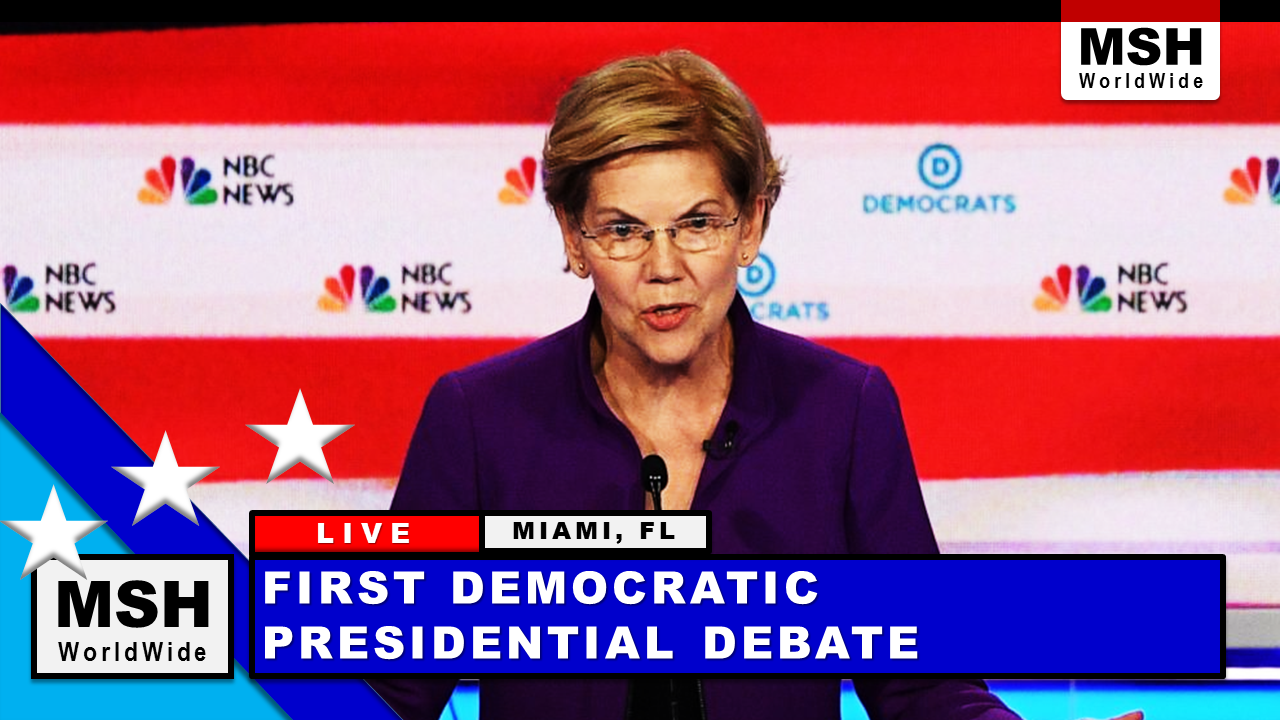
Miami, Florida June 26th, 2019 (CNBC). Ten Democratic candidates faced off for the first time Wednesday night in Miami, making repeated appeals to the working class and targeting corporations as they jockey for position in the 2020 presidential primary.

Some key business issues barely came up during the first Democratic debate. President Donald Trump's trade war with China and pledges to break up technology titans saw little or no mention during the two hours of debate.

But Democrats drilled into arguments that they are best equipped to boost the working and middle classes as they elbow to gain ground in a field of two dozen strong. From pledging to make opioid companies criminally liable, promising to reduce drug prices and proposing to take on corporate consolidation, the 2020 candidates kept up the scrutiny of corporate America and the wealthy that has marked the early days of the primary cycle.

From the start, contenders aimed to show how they could improve a solid U.S. economy earning strong marks from voters. Sen. Elizabeth Warren, D-Mass., called for "structural change" to improve a system she says benefits "giant" drug and oil companies but not consumers. Sen. Amy Klobuchar, D-Minn., said Trump "sits in the White House and gloats" while Americans struggle to afford college and health-care premiums.


Former Rep. Beto O'Rourke said he would reverse the 2017 GOP tax cuts and hike the corporate tax rate to 28% from the current 21% to pay for social programs. And Sen. Cory Booker, D-N.J., argued that indicators "from GDP to Wall Street's rankings is not helping people in my community."

Rep. Tim Ryan, D-Ohio, slammed General Motors for having the "audacity" to move car production to Mexico after getting a tax cut and a taxpayer bailout.

The first of two nights of debates showed a Democratic field itching to prove a populist bent in a party that has increasingly argued large corporations have prospered while consumers have suffered. And Warren — the highest polling candidate on stage Wednesday night who has pushed to break up companies from Amazon to Monsanto and tax wealth above $50 million faced no direct attacks from her competitors.


Aseem Prakash, a University of Washington political science professor, said he saw inequality and the message of big corporations working against America as the main theme of the night. He called it a "serious problem" that "the rank and file of the Democratic Party want to hear." Prakash described the message "populism light."

The second of the two debate nights, hosted by NBC News, MSNBC and Telemundo, will take place 9 p.m. ET Thursday. ET. It will feature three of the race's top contenders in former Vice President Joe Biden and Sens. Bernie Sanders and Kamala Harris. Divisions have surfaced among those three candidates on economic issues from trade to health care.

© 2019 ALL RIGTHS RESERVED
MSH WorldWide By Marcelo Santiago Hernández™.

jueves, 8 de noviembre de 2018

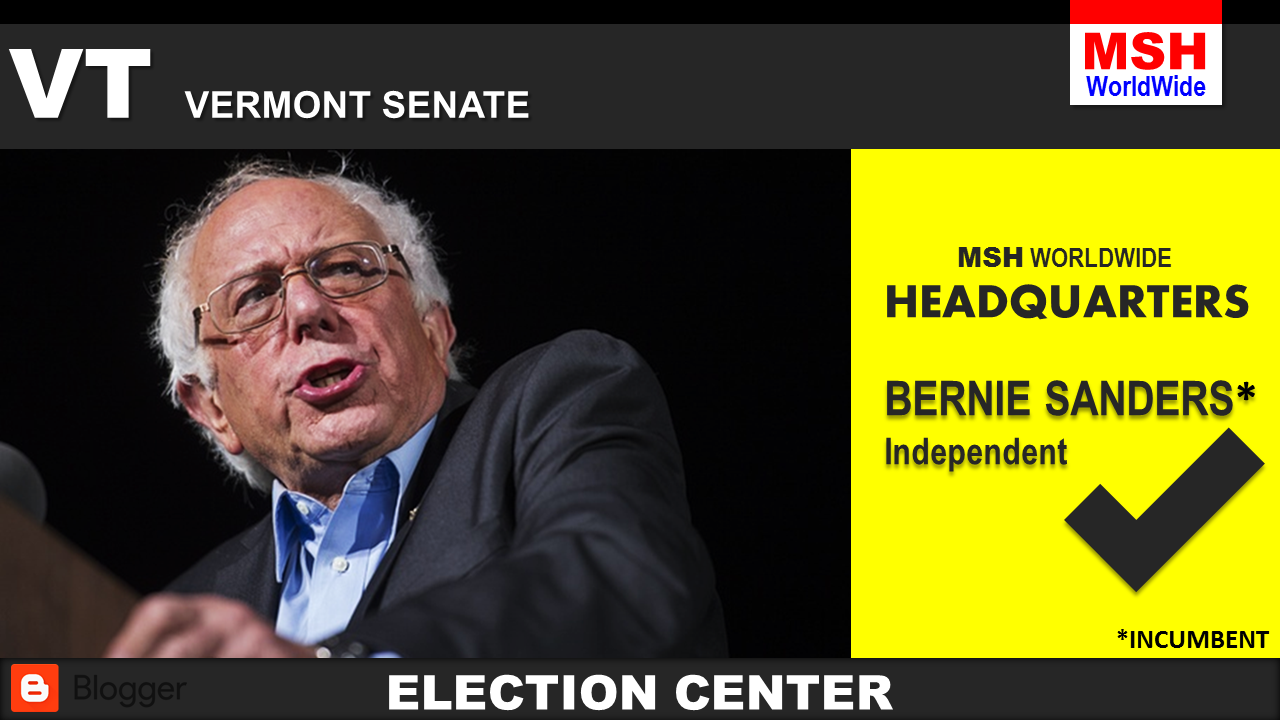
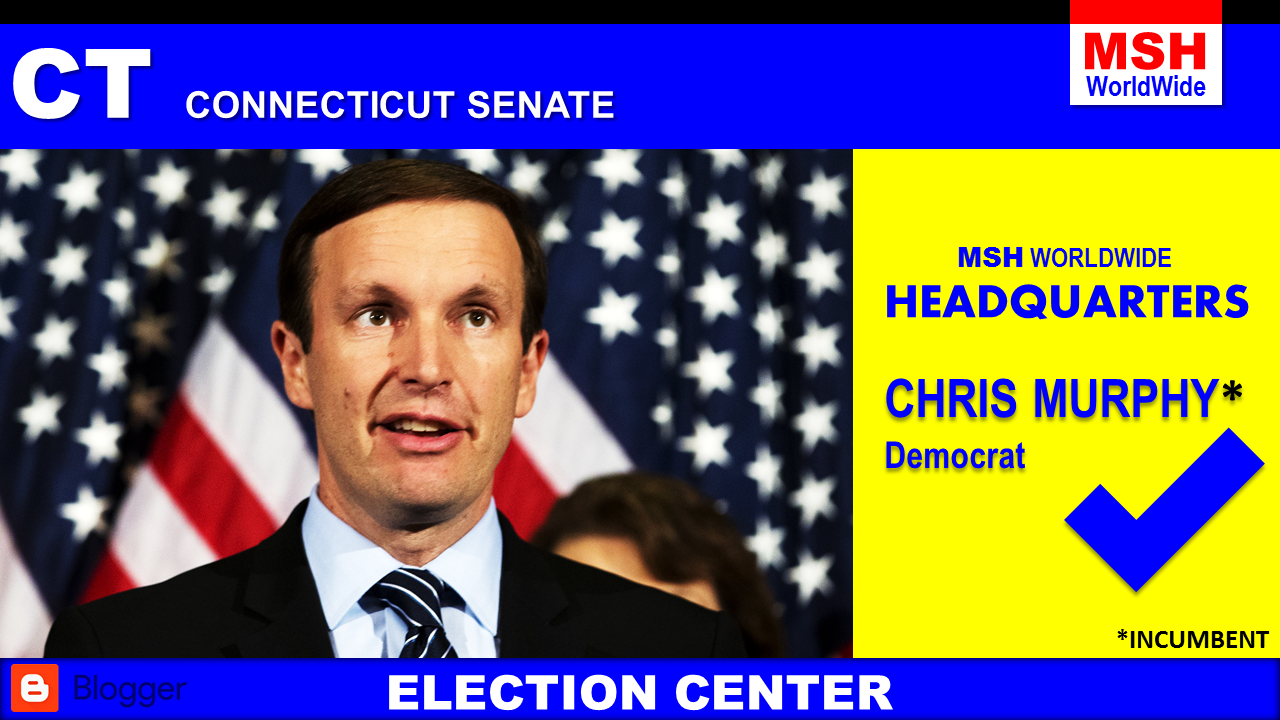
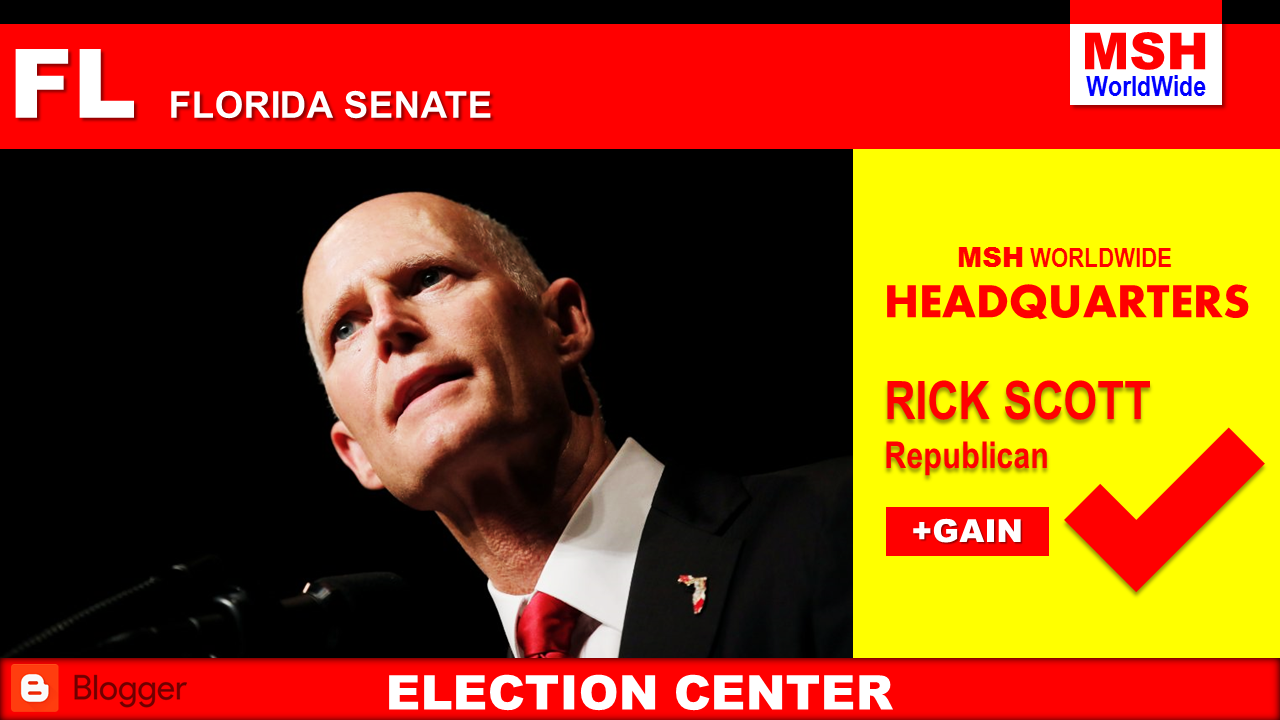
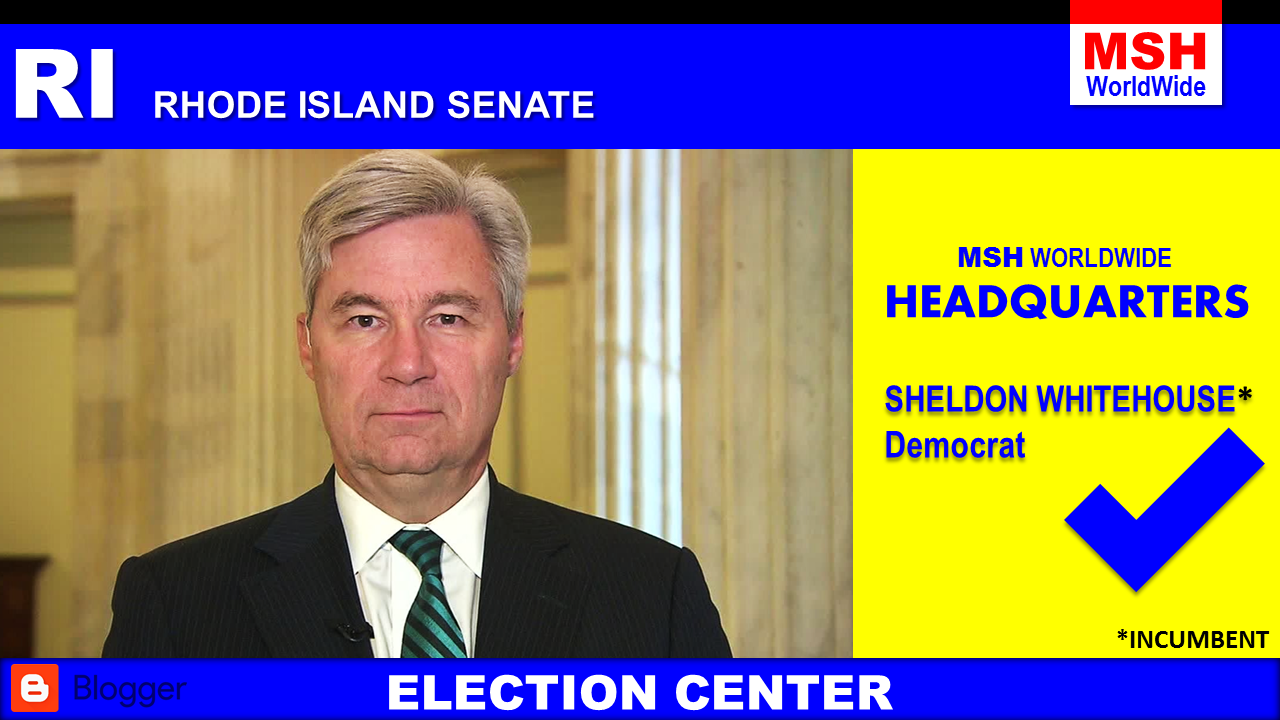
2018 Midterms Election #ElectionNight.

New York City, USA November 8th, 2018 (FOX News). The big story coming out of Tuesday’s midterm elections is how totally the news media missed the issue of what waves were building. There was no red wave. If there had been, Republicans would have kept majority control of the U.S. House and had even more pickups in the Senate.

There was no blue wave. If there had been, Democrats would have gained control of the Senate. There was an underreported green wave, which attempted to drown Republicans in left-wing money. And there was the usual anti-Republican liberal media wave, which tried to prop up Democrats.

This was a fascinatingly complex election in which unique Republican personalities won re-election as governors in New Hampshire, Vermont, Massachusetts, and Maryland – three clearly blue states and one purple state in the Northeast. The biggest change in this election was the sheer volume of money generated by left-wing billionaires and activist groups who hate President Trump. In congressional race after congressional race, Republicans suddenly found millions of dollars poured in against them on a scale that resembled Senate races in the past.

House Republicans had hurt themselves by allowing the number of House incumbent retirees to become larger than any time since 1930, when the Brookings Institution started tracking congressional retirements. Breaking an 88-year record for retirees is a tough way to start an off-year election for the incumbent president’s party.

Despite this institutional disadvantage, President Trump’s House losses were far less than either the 54 seats President Clinton lost in 1994 or the 63 seats President Obama lost in 2010. Measured against the Clinton and Obama standard, you would have to give President Trump an A+ for keeping Republican House losses to a minimum – and setting the stage for a Republican majority comeback in the 2020 presidential election.

In the Senate, the president, working with Majority Leader Mitch McConnell, R-Ky., put together a great, focused campaign that has reversed historic norms and gained seats. In fact, as I am writing this, it appears that enough Republicans will have won Senate seats that it will be far more difficult for Democrats to have a shot at winning a Senate majority in 2020 than anyone might have expected.

The best example of the green wave’s failure is Rep. Beto O’Rourke, D-Texas. He became the darling of the media – the left’s political rock star to battle Republican Sen. Ted Cruz, who the media despises. O’Rourke raised more than $70 million, a record for a U.S. Senate race – and an amount we used to associate with presidential campaigns. After all the liberal media hype, and the sheer volume of money from the green wave, O’Rourke lost.

Once again, the voters of Texas disappointed the liberal media by refusing to elect their darling. Republicans gained Senate seats to an unprecedented degree, because President Trump personally crisscrossed the county holding massive rallies, which dwarfed the size of former President Obama’s rallies.

This was President Trump’s victory, and he and Sen. McConnell will use it well to continue getting judges and other nominees confirmed by the Senate, to block left-wing actions by the Democrats, and to set the stage for key legislative achievements the American people want (probably starting with infrastructure investments and reforms).The president defeated both the money wave and the liberal media – and had a very successful midterm election for a first-term president.

FULL PROJECTIONS 
Order for poll closing time and winners in this time.

Mississippi Special - RUNOFF
Arizona - TOO CLOSE TO CALL


MAJOR PROJECTIONS


© 2018 ALL RIGTHS RESERVED
MSH WorldWide By Marcelo Santiago Hernández™.